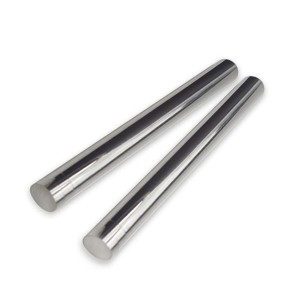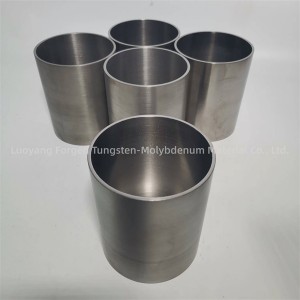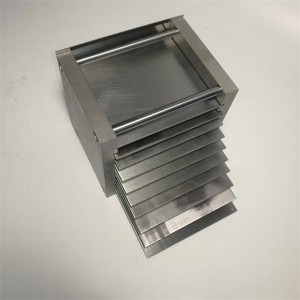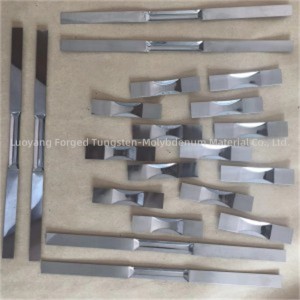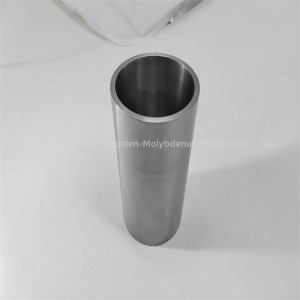
High density pure tungsten bar tungsten rod

The production of high-density pure tungsten rods typically involves several key steps:
Material selection: Select high-quality tungsten powder as raw material. The purity of tungsten powder is critical to ensuring the desired properties of the final product. Mixing: Carefully mix the selected tungsten powder to obtain a homogeneous mixture. This step helps ensure uniformity of material composition. Compaction: The mixed tungsten powder is then compacted using a special process such as powder metallurgy, which involves applying high pressure to form the material into a dense and coherent shape. Sintering: Compacted tungsten material is sintered at high temperatures in a controlled atmosphere. Sintering helps bind the tungsten particles together to form a dense, high-strength structure. Hot isostatic pressing (HIP) (optional): In some cases, sintered tungsten material may be subjected to hot isostatic pressing to further increase its density and eliminate any residual porosity, resulting in a denser, more uniform product. Machining: After the sintering process, the tungsten material can be precision machined to achieve the required size and surface finish, ensuring it meets the specifications for high-density pure tungsten rods and rods. Quality Control: Throughout the entire production process, quality control measures are implemented to verify the integrity, purity and density of tungsten materials to ensure they meet the stringent requirements of high-performance applications.
By precisely following these production steps and strict quality control, manufacturers can produce high-density pure tungsten rods and rods with superior strength, density and performance for a wide range of industrial and technical applications.
High-density pure tungsten rods and rods are used in a variety of industrial applications due to their excellent physical and mechanical properties. Some common uses include:
Radiation Shielding: The high density of pure tungsten makes it an excellent material for radiation shielding in medical and industrial facilities. Tungsten rods and rods are used to protect against X-rays, gamma rays and other forms of ionizing radiation. Aerospace and Defense: Tungsten is used in aerospace and defense applications where its high density and strength provide advantages. It is used in components such as aircraft control surface counterweights, high-speed aircraft components, kinetic energy penetrators, and ballast counterweights. Electrical and Electronic Components: Tungsten rods are used in electrical contacts, welding electrodes and other electrical and electronic components due to their high melting point, electrical conductivity and resistance to arc erosion. Manufacturing and Molds: Due to its high melting point, hardness, and thermal conductivity, tungsten rods are used to produce high-temperature furnace components, molds, die-cast tools, and other wear-resistant parts. Filament: Tungsten rods are commonly used as filaments in lighting applications such as incandescent light bulbs, as well as in cathode ray tubes and other electronic devices that require a reliable and durable heating element. Medical devices: Tungsten rods can effectively block and absorb radiation, so they are used in medical devices such as radiation therapy equipment, collimators, and shielding components.
These are just a few examples of the many uses of high-density pure tungsten rods in various industries, demonstrating the versatility and importance of this material in modern technology and manufacturing.
| Product Name | High Density Pure Tungsten Bar Tungsten Rod |
| Material | W1 |
| Specification | Customized |
| Surface | Black skin, alkali washed, polished. |
| Technique | Sintering process, machining |
| Meltng point | 3400℃ |
| Density | 19.3g/cm3 |
Wechat:15138768150
WhatsApp: +86 15236256690
E-mail : jiajia@forgedmoly.com